


Kent News, UK
Freemasonry: An enjoyable hobby or a dark secret society?
19 January 2014 | UPDATED: 24 January 2014
Joe Bill
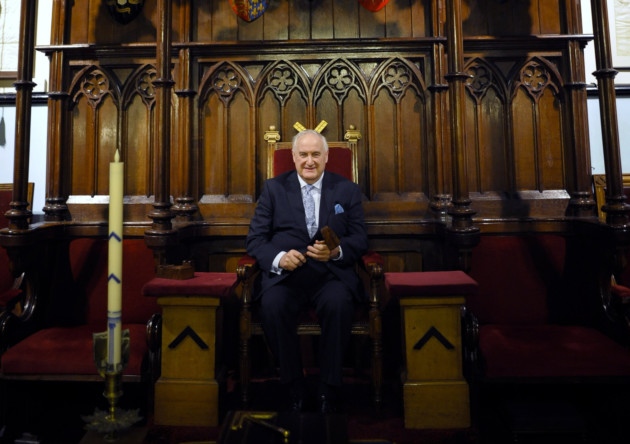
Deputy Provincial Grand Master Roger Odd at the Canterbury Masonic Lodge and Museum Press Day, 9th January 2013.
We talk to Kent’s man at the top of the masonic ladder
Freemasonry in popular culture:
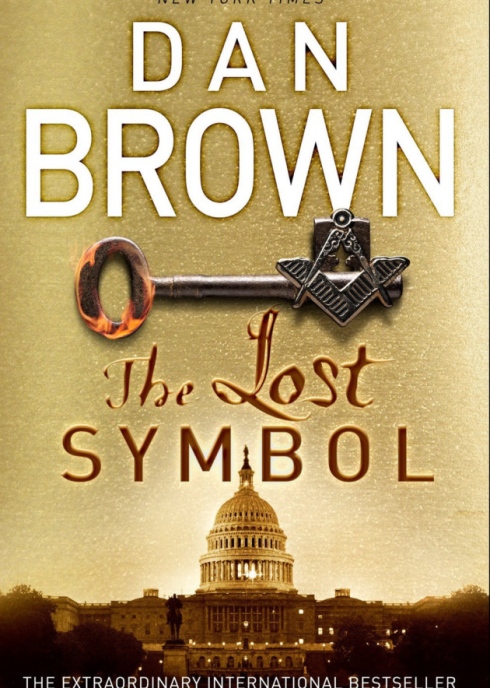
Author of the Da Vinci Code, Dan Brown used the Freemasons at the very heart of his follow-up to his global smash - The Lost Symbol.
They were also alluded to the Da Vinci Code as protectors of the secret of the Holy Grail.
He said: “They have a negative effect on some people. I have read the books of Dan Brown and at first I have thought that I didn’t like what he was saying. But actually if you read it in context he is just talking about various organisations.
“Dan Brown is trying to sell books and he is into mystery and secrecy and that’s what he is about. I don’t feel unhappy about what he has said. But it is unfortunate when people take it out of context.”
The Freemasons were also lampooned by America’s favourite disfunctional family The Simpsons, when Homer attempts to join the ancient Stonecutters. He struggles with the initiation society - which involves being spanked with wooden paddles - and then causes the group to disband when he destroys an ancient parchment by using it to clean his mouth after a meal.
Strange handshakes, bizarre initiation ceremonies and deep secrets passed down through the generations; the common perception of the Freemasons tends to be well lodged in our collective psyche.
Certainly, the mystique which surrounds it does the organisation no harm at all.
After all, where there comes secrecy comes a sometimes overpowering desire to learn more.
But where once prospective members had to be invited to join – and even then run the risk of being ‘blackballed’ and thus rejected – today the application process appears to be a little more open.
Deputy Provincial Grand Master Roger Odd at the Canterbury Masonic Lodge and Museum Press Day, 9th January 2013.Deputy Provincial Grand Master Roger Odd at the Canterbury Masonic Lodge and Museum Press Day, 9th January 2013.
Or, at least, that’s what they’d like us to believe, after inviting us to peer behind the curtain at one of the county’s biggest lodges.
This is very much a stage-managed visit; with access granted only to media-savvy masons and lots of hints that by expressing an interest, a big book of juicy secrets is opened to you.
The big question, of course, is just who are the Freemasons, and by joining them what do you become involved in? Although, perhaps the bigger question is: Are they going to tell us?
If we are to believe it on face value, it is little more than a glorified gentlemen’s club with a penchant for dressing up and a desire to donate to local charities.
A website promoting its Kent work describes it thus: “It is a society of men concerned with moral and spiritual values.
“It means different things to each of those who join. For some it’s about making new friends and acquaintances. For others it’s about working together to help deserving causes. But for them all, it is an enjoyable hobby.”
But legend suggests far more to it than that...of them wielding enormous influence in today’s society and even of being guardians of earth-shattering secrets.
“I think some people have the wrong idea about Freemasons,” said Roger Odd who goes by the rather grand title of Deputy Provincial Grandmaster.
“There is a lot of intrigue and lot of history about Freemasonry. Much of which we ourselves are only just discovering.”
The mystery surrounding it has been compounded over the years by myths and conjecture circulated within popular culture and a public who like nothing more than to speculate. Indeed, even this article fans the flames of what ‘might be’ behind the Freemasons.
Anxiety about the organisation is, as a consequence, rife. It’s not helped by being very much a men-only
organisation – which sits uncomfortably in the all-inclusive age we live in.
Mr Odd has been a mason for more than 40 years and is adept at discussing the organisation’s purpose while simultaneously keeping his cards practically vacuum-packed to his chest.
Masonic lodges – the individual ‘clubs’ which make up the Freemason movement – can be found in the vast majority of our towns and cities – and, in the shadow of its mighty cathedral, Canterbury is no different.
Its lodge is a non-descript red-brick building just yards from Westgate Towers in St Peter’s Street. Its cornerstone was laid in 1880 and today stepping through its doors ushers you into a world of rather ornate splendour.
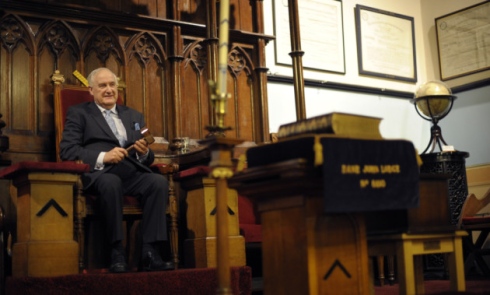
To the untrained eye it appears to have the flourishes of a place of worship or courtroom. To the trained eye it is probably designed to hint a little at both.
The seats which line the wall are covered in crimson velvet; candles and staffs are dotted around the room. On the walls are the symbols of the various lodges which belong to what is dubbed the Masonic Province of East Kent; of which this is ‘head office’.
Sat on a chequered carpet in the centre of the large room is a brown wooden box, roughly one-metre square, depicting Jacob’s Ladder; a tale from the Old Testament which protrays it as a route to Heaven.
It would hint at an affinity with Christianity – yet faith is required only as a concept rather than of a particular persuasion.
“You have to be a believer that there is a supreme being,” explains Mr Odd of what is required of any future member. “In other words that there is a God.
“We don’t allow atheists in, but we allow in people who are of any religion whatsoever. I sometimes go to a lodge in Ipswich where they have people of several different faiths. Hindus, Sikhs, Muslims, Jews and Christians are all members.
“They all have a common belief in a supreme being and that allows us to have morals that we all have a particular standard with.”
This building has become the unofficial centre of much of the county’s masonic activities.
The east Kent ‘province’ stretches as far as Gravesend to Margate, and Cranbrook to Dymchurch.
Across Kent there are some 7,000 Freemasons – drawn from 185 different lodges.
There are some 200,000 members across England and Wales and an estimated six million worldwide. The common theory is that by being a Freemason you get career advantages and access to a network of opportunity and privilege.
Such notions are rather compounded by recurring stories making national headlines.
Just this week, the Independent exposed what it claimed was a “secret network of Freemasons used by organised crime gangs to corrupt the criminal justice system”.
It claimed underworld syndicates used their contacts in the Freemasons to “recruit corrupted offices” inside Scotland Yard.
Retired pharmacist Mr Odd is quick to deny there is any morally-suspect behaviour the brotherhood is involved in.
He has held high positions within both the masons and the pharmaceutical sector, but insists members are taken from all walks of life; “from bin men to bishops” as he puts it.
“If someone came to me,” he explains, “and said ‘I’m a Freemason you’ve got to help me’, I’d probably react in exactly the opposite way. You cannot use your Freemasonry for doing that.
“But if someone was in difficulties and was in need of some plumbing or something, inevitably you would know somebody who is a Freemason who you can ask to help. In exactly the same way you would with a next door neighbour.
“We don’t ‘protect’ our own. If someone is bad, I assure you they are dealt with.
“We all have morals and standards and a code of conduct within the country we live.
“We are not encouraging people to break laws because we still have the rules of that country to work to.
“There are people who feel very strongly about Freemasonry. I think they are nervous and worried about what Freemasons do and what they are.
“There have been some incidents with Freemasonry that we are not proud of, not so much in this country, but in Italy for example there have been lots of connections with the Mafia.
“But there are bad eggs in every organisation whether it is in government, journalism or whatever.
“It is up to that organisation to try and get rid of them. We have a very strict code of conduct and if somebody breaks that code I assure you they are dealt with severely.”
Opening their doors to try and dispel the mystique they themselves encourage is something they do on a fairly regular basis, yet the Freemasons have decided 2014 is to be a year they interact more with the public.
And, of course, in a world where there is an ever increasing demand on our time, they are aware of the need to remind would-be members they should come along and see if it’s for them.
In times gone by, the masons approached their members. Now they accept applications, although applying is no guarantee you’ll pass the vetting process.
Adds Mr Odd: “It’s not a process of approaching new members anymore, which is how it used to be in the past, it’s the case that we now publicise it. If people are interested and they feel they’d like to join they can come and ask and find out some information.
“Not everybody is going to like Freemasonry. But if you have an interest, our point is, go and ask.
“We want to be part of the community. We’ve heard comments from people questioning what we are doing. I think after the Second World War the masons became very secret and very insular.
“But now we are thinking ‘why have we got to hide everything under a bushel?’.
“We are very proud of the work we do for charity.”
In pursuit of an answer as to what the Freemasons actually do, charity is about the only thing they will definitely admit to. It is understood all masons are expected to dig deep to fund charitable endeavours
Adds Mr Odd: “Did you know that the amount of money the masons give to the community is only second to the lottery?
“The hospices, Kent Air Ambulance, lots of charities receive something every year and they are pleased that we do it.
“We have given money for the training of young people and some into the research into various diseases, in fact, we’ve just given £2.5 million to the Royal College of Surgeons.
“We have helped apprentice stonemasons at Canterbury Cathedral and, of course, we help individuals in distress. Some are Freemasons but we also realise we have to help people in the community that are not Freemasons.”
To get a hint of why the Freemasons keep up a veil of secrecy, it is perhaps worth looking back in time to its very creation.
Its roots lie in the stonemasons dating back to the 17th century – which continues to be reflected in the Freemasonry logo, which features a square and compass; the tools of the stonemason’s trade.
The stonemasons, so legend has it, would have local fraternities which regulated the qualifications of mason and their interaction with authorities and clients.
Over the years, the perception is that was broadened out to encompass a vast array of professions.
Mr Odd said: “The stonemasons used to gather together to talk about the various tools of the trade.
“That is perhaps where the word secret starts creeping in. But have you ever tried to ask a plumber or another trade person exactly how they do their job?
“I am a pharmacist and it used to be very secret what I used to do behind that dispensary screen in making up the medicines.
“People may ask you how you do something and we say ‘well we can show you a little bit but not everything’ because they are the tools of the trade. And that is the same in Freemasonry.”
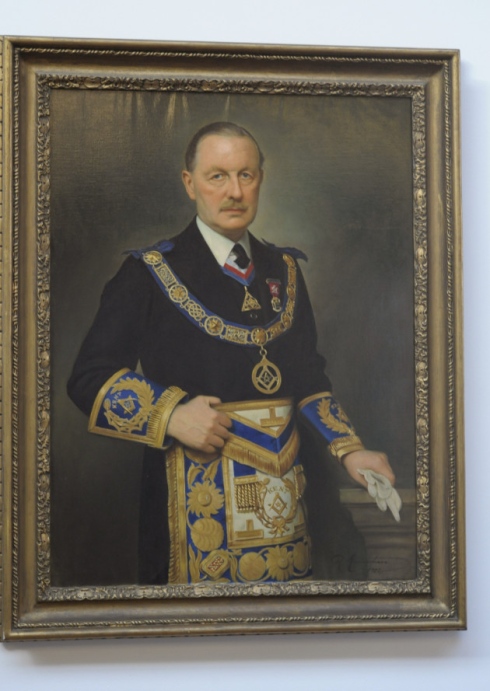
Members demonstrate their seniority within the movement by the type of gloves and aprons they wear when attending meetings, adding gold chains and various colours to highlight the position they hold within the brotherhood.
The rumours of rituals are also true, except they are known as “playlets”. In their temples, members act out stories that teach morals and standards of behaviour that all members should practice. It is using these playlets, the masons claim, that rituals and initiation ceremonies for new members are born. But what exactly? All they will say is they are “similar to a traditional church ceremony” but that it too remains something confided in only to members.
Says Mr Odd; “It’s the same with magicians; you ask them to tell you a trick and they say no. You have to join the Magic Circle and then they show you how to do it. And that’s the magic if you like, which makes the mason’s special.”
There is more than a hint of religious fervour to the building and the imagery used by the masons. So how does the movement fit with the Church?
“The Church has always been a bit apprehensive to Freemasonry,” admits Mr Odd, “because it depicts some of the stories in the Bible from the Old Testament. It can be seen to be quasi-religious – stepping on their religious ground – though it isn’t religious.
“But there have been some very senior Freemasons who have been high up in the church. A past Archbishop of Canterbury was a very high Freemason.”
Other famous members include everyone from Winston Churchill to Mozart, John Wayne to Nat King Cole. The Duke of Kent has been the UK Grandmaster for almost 50 years.
Trying to gauge opposition to the group is surprisingly difficult.
Whether it was academics or existing members, there was a distinct lack of appetite to offer any sort of alternative view other than than presented by the senior figures.
Now that could be simply a case of a lack of knowledge of what the masons do, or, as the conspiracy folk would have you believe, a sign something more influential is afoot.
Certainly, over the decades there have been a number of concerns aired about the impact of the Freemason movement on the police force nationwide; although no suggestion the issue carries influence in Kent.
Similar to the Masons, Rotary clubs also exist across the world raising money for charity. They also have a selective process for members and operate in small local groups, under one united banner.
The Isle of Thanet Sunrise Rotary Club was one of the first to accept women members and former president Dale Windridge is proud that the Rotary has moved on.
He said: “The Rotary position is that all clubs should be mixed and that it is no longer an ‘old gentleman’s club’.
“Our club was one of the first to be mixed and I can also say that given the choice I would rather be in a mixed club. I think men and women behave better, and combined you get the strengths from both and become a stronger unit because of it. Some of our best members are women.”
However, Mr Windridge doesn’t believe that groups like the Masons should be criticised for their approach.
He added: “I’m not a Mason so I cannot comment on them, but personally I think there should be a choice when it comes to mixed clubs. Sometimes men want to spend more time with men and women want to spend more time with women.
“I don’t think that any club, including golf clubs, should be forced into a direction that they don’t want to go because of Government or European pressure.”
The recruitment drive continues - even developing links with the University of Kent and dropping the age of entry from 21 to 18.
Kent Museum of Freemasonry trustee, and Canterbury lodge member, Tony Eldridge says it is important to bring new blood into the group. He said: “We have set up a scheme with the university which could be a rich vein of introductions to us.
“We are making sure they know we are open to membership and a lodge in Canterbury has been earmarked to build connections with the institution. The master of that particular lodge lectures there.”
The museum has been a very public calling card of the organisation in Canterbury.
Adds Mr Eldridge: “The museum opened in the 1930s but it was only refurbished two years ago. We have worked very hard to make it a more modern and accessible museum.
“We’ve kept all of the lovely things that members have gifted to us over many years and they are now on show. Footfall since we reopened has gone from 1,000 to 8,000 visitors per year so that is a big improvement.”
Artefacts displayed at the museum include the clothing worn throughout the years by various Masonic groups, as well as lists of past and present members of the secret society.
The Masons use the secrecy and pomp and ceremony to its benefit - an exclusive club which may boast society’s most powerful individuals. Or, indeed, may not. Either way, it continues to hold a particular place in society. Quite how influential that may be, remains completely unclear.
It, perhaps more than any other organisation, however, knows the truth in the line that secrets aren’t secrets if you tell everyone.
http://www.kentnews.co.uk/news/freemasonry_an_enjoyable_hobby_or_a_dark_secret_society_1_3215492
Deputy Provincial Grand Master Roger Odd at the Canterbury Masonic Lodge and Museum Press Day, 9th January 2013.
Deputy Provincial Grandmaster Roger Odd is unmoved by the spotlight it casts on the group.
Oil painting of Lord Cornwallis at the Canterbury Masonic Lodge and Museum Press Day, 9th January 2013.
The Lost Symbol by Dan Brown
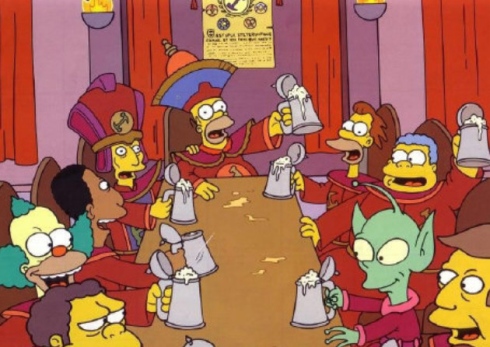
Homer joins the Stonecutters in The Simpsons


